Sleep Sanity
How to night wean: a gradual 7 night schedule for breast and bottle
When babies are usually ready to drop night feeds, a night by night taper for breast and bottle feeding, how it fits alongside sleep training, and what to do if it stalls.
Night weaning is dropping the feeds that happen between bedtime and morning. Done gradually, most babies barely notice. Done cold, you get three bad nights and a hungry baby. This guide gives you the schedule the Sleep Sanity app uses, with the actual numbers for breast and bottle, and the checks to do before you start.
Is your baby ready?
This is a conversation with your pediatrician first, because it depends on weight, growth and your particular baby. The usual markers:
- Age. Many babies can go without night feeds from around 6 months. Some are ready earlier, plenty keep one feed until 9 months or so. Under 4 months, night feeds are not optional.
- Weight gain is on track and your pediatrician is happy with it.
- Daytime intake is solid. If your baby is a distracted eater by day and makes it up at night, fix the day first by feeding in a quiet room.
- The night feeds are short or sleepy. A baby who drinks a full feed at 2am is probably hungry. A baby who takes two minutes and drifts off is using the feed to fall asleep, which is a habit you can change.
If you are breastfeeding, a gradual taper also protects your supply and avoids blocked ducts. Dropping a feed overnight is uncomfortable for you as well as your baby.
How the taper works
Most babies who are still feeding at night have two feeds: an earlier one, often around 10pm to midnight, and a later one around 3am to 4am. The schedule reduces both, and drops the later feed first. That matters: the early feed is the one that carries your baby to morning, so it goes last.
Each night you offer a little less. For breastfeeding, that is fewer minutes. For a bottle, fewer ounces. Once a feed is down to a minute or an ounce, you skip it, and respond to that wake the way you respond to any other wake: a brief settle, no feed.
The 7 night schedule
These are the app's Gradual and Steady schedules. Night 1 starts from where you are now. The later feed is gone by night 5 and the earlier feed by night 7.
Breastfeeding (minutes per side, or total)
| Night | Earlier feed | Later feed |
|---|---|---|
| Night 1 | 10 min | 10 min |
| Night 2 | 8 min | 8 min |
| Night 3 | 7 min | 5 min |
| Night 4 | 5 min | 3 min |
| Night 5 | 3 min | none |
| Night 6 | 2 min | none |
| Night 7 | none | none |
If your feeds are currently longer, start from 15 minutes and stretch the same shape over the week. If they are already short, start from 5 or 7.
Bottle (ounces)
| Night | Earlier feed | Later feed |
|---|---|---|
| Night 1 | 4 oz | 4 oz |
| Night 2 | 3 oz | 3 oz |
| Night 3 | 3 oz | 2 oz |
| Night 4 | 2 oz | 1 oz |
| Night 5 | 1 oz | none |
| Night 6 | 1 oz | none |
| Night 7 | none | none |
If your baby takes 5 or 6 ounces at night now, start there and take the same steps down. The app has gentler versions that run over 14 nights instead of 7, which is a better pace for a baby under 7 months or for a parent who wants the softest possible landing.
How to do the reduced feed
- Keep the lights low and do not talk much. This is a boring feed, not a visit.
- Time the feed or measure the bottle. Guessing always drifts upward.
- When the time or amount is up, stop, even if your baby protests. Burp, and put them back down awake.
- If your baby wakes again before the next scheduled feed, settle without feeding, the same way you would during sleep training.
- Add the missing calories back into the day. An extra ounce at each daytime bottle, or an extra nursing session, keeps total intake the same.
Running it alongside sleep training
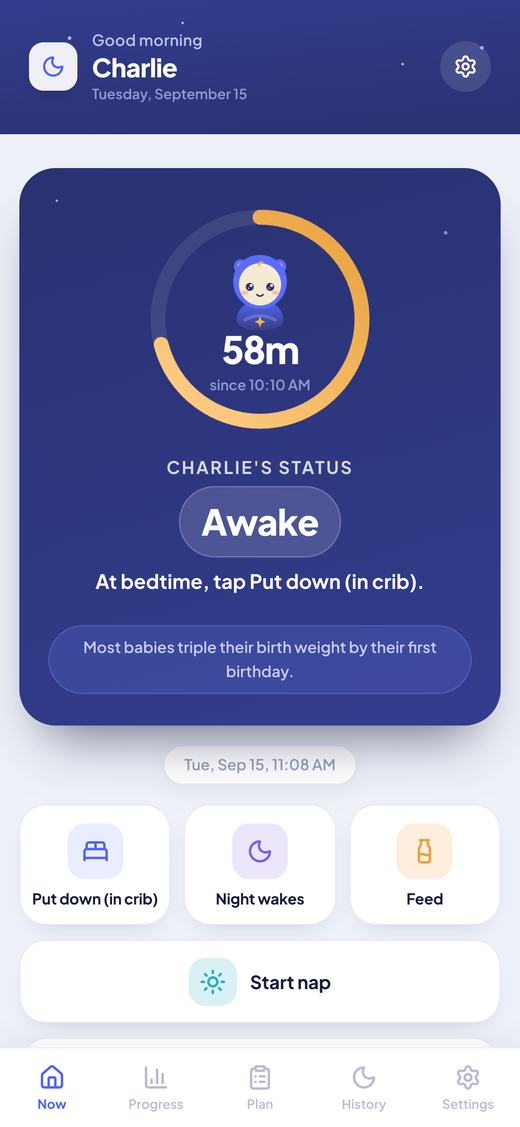
Night weaning and sleep training work well together because they fix the same habit from two sides. If you are following the Ferber method or a similar plan, the rule is simple: at a scheduled feed, feed the reduced amount and put down awake. At any other wake, follow the check-in plan. The app shows tonight's feed targets next to tonight's check-in intervals so you are not juggling two charts.
If you would rather do one thing at a time, sleep train first with the night feeds kept exactly as they are, then start the taper a week or two later once nights are calmer. Both orders work. Doing both at once is faster but louder.
If it stalls
- Baby wakes at the old feed time every night, wide awake. Normal for the first three or four nights. Hunger wakes usually fade; habit wakes take about a week.
- Baby is clearly hungry, taking the full reduced feed and crying for more. Hold at the current night for two or three nights instead of dropping further, and look at daytime intake.
- Early morning wakes get worse. Common around night 5 to 7. Check that bedtime is not too late for their age with the wake window calculator, and treat anything before 6am as night.
- Illness or teething lands mid week. Pause at the current night, feed what your baby needs, and pick up where you left off when they are well. You rarely go all the way back to night 1.
FAQ
What age can you night wean?
Many pediatricians are comfortable from around 6 months if weight gain is good and daytime intake is solid. Some babies are ready earlier, and plenty keep one night feed until 9 months. Under 4 months, night feeds are needed. Always check with your pediatrician first.
How long does night weaning take?
A gradual taper takes 7 to 14 nights. The later feed usually goes within 4 or 5 nights and the earlier feed by the end of the schedule. Stopping cold is faster on paper but usually means several rough nights and a hungry baby.
Which night feed should you drop first?
The later one, usually around 3am to 4am. The earlier feed, around 10pm to midnight, is the one that carries your baby through to morning, so it is the last to go.
Can you night wean and sleep train at the same time?
Yes, and they reinforce each other. Feed the reduced amount at scheduled feeds and put your baby down awake, and treat every other wake with your sleep training check-ins. If that is too much at once, sleep train first and start the taper a week or two later.
Will night weaning hurt my milk supply?
A gradual taper gives your body time to adjust and lowers the risk of blocked ducts. If you feel full in the night, express just enough for comfort rather than a full session. Supply follows demand, so adding a daytime feed keeps total output steady.
Sources
- American Academy of Pediatrics, HealthyChildren.org: Amount and schedule of baby formula feedings
- Canadian Paediatric Society, Caring for Kids: Healthy sleep for your baby and child
- NHS: How to stop breastfeeding
- American Academy of Pediatrics, HealthyChildren.org: Weaning your baby
- Mindell JA et al. Behavioral treatment of bedtime problems and night wakings in infants and young children. Sleep, 2006
Sleep Sanity is informational, not medical advice. Talk to your pediatrician before starting any sleep-training approach.
More from Learn
When to start sleep training: age, readiness signs and the weeks to avoid
The age most pediatricians suggest, the signs your baby is ready, the situations that make a bad week to start, and what to do if you are not there yet.
Read 7 min readToddler sleep training: 12 months to 3 years, including the crib climber
How sleep training changes after the first birthday: the one nap schedule, bedtime stalling, standing and climbing, the toddler bed question, and a check-in plan that works for toddlers.
Read 8 min readSleep training methods compared: Ferber, chair, pick up put down, fading and extinction
The five main sleep training methods side by side, how much crying each involves, how long each usually takes, and how to pick one your family can actually stick to.
ReadTonight can be the first better night.
Two taps from here to logging. No account, no card, no setup beyond your baby's name.

Free. No ads. No in app purchases.Or use it in your browser