Sleep Sanity
The Ferber method for naps: the 30 minute rule and a realistic plan
How to use the Ferber method for naps without wrecking the day: when to start naps, the 30 minute rule, what to do with a short nap, and why nights come first.
Naps are harder than nights. Sleep pressure is lower in the day, the room is brighter, and a baby who has learned to settle at 7pm can still fight a 10am nap for weeks. The good news is that the Ferber method works for naps with two changes: a time limit, and patience.
Nights first
Do not start naps and nights on the same day. Fix nights first. Night sleep is driven by the body clock and by much higher sleep pressure, so it responds within days. Once bedtime is calm and the nights are reasonable, usually a week or two in, naps start to improve on their own because your baby now knows how to fall asleep in the crib. Start working on naps deliberately only if they are still a battle two weeks after the nights have settled.
The 30 minute rule
This is Ferber's own guidance. At nap time, do a short version of the bedtime routine, put your baby down awake, and use the same check-in intervals you are using at night. If your baby has not fallen asleep after 30 minutes, the nap is over. Get them up, keep it calm and a bit boring, and move to the next nap or to an earlier bedtime.
The limit matters. Without it, a failed nap attempt can take an hour, your baby is now overtired and hungry, and the whole afternoon slides. With it, the worst case is a missed nap and an early bedtime, which is survivable.
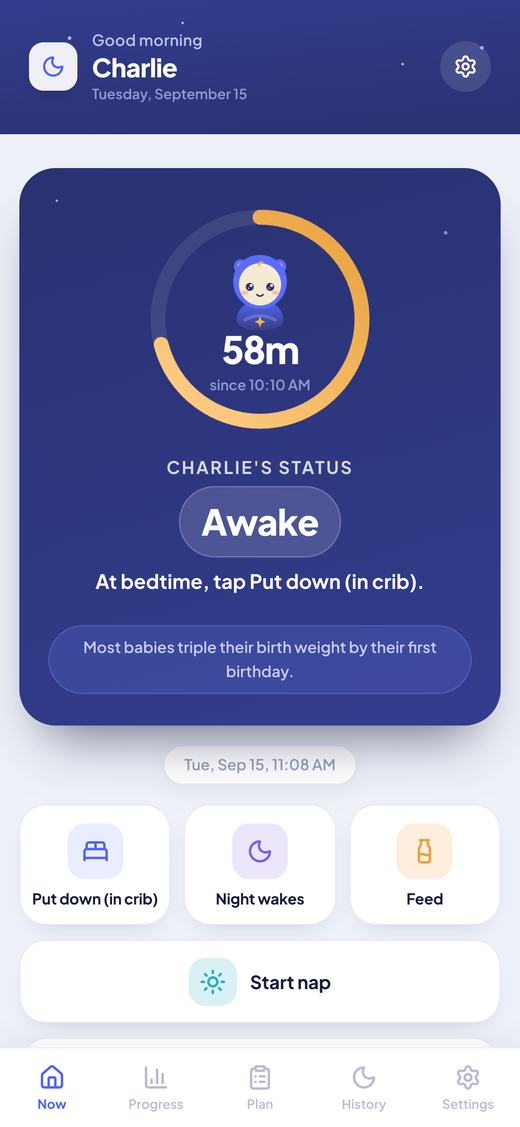
Use the timer for the intervals, and keep an eye on the total.
What to do with a short nap
Falling asleep is one skill. Linking sleep cycles is another, and it comes later. A baby who falls asleep well and wakes crying after 30 to 40 minutes has hit the end of one cycle. Options, in order:
- Wait. Give the same first interval you would at night before going in. Many babies resettle on their own once they have the skill.
- If they do not resettle within about 15 minutes, get them up. Do not spend the whole nap window on a resettle.
- Shorten the next wake window a little, since a short nap buys less awake time than a full one.
Short naps usually lengthen somewhere between 5 and 7 months as sleep matures. Before that, one long nap and two short ones is normal.
Timing is most of it
Naps fail more often from timing than from anything else. A baby put down before they are tired will play, then cry, then be overtired by the time the 30 minutes are up. Use the wake windows for their age as a starting point and watch for the first yawn or the glazed stare. The wake window calculator gives you a sample day with nap times for your baby's wake up time.
A realistic plan
- Days 1 to 3. Use the 30 minute rule for the first nap of the day only. The morning nap is the easiest because sleep pressure from the night is still high. Do whatever works for the other naps: stroller, carrier, car.
- Days 4 to 7. Add the second nap. Keep rescue naps for the rest.
- Week 2. All naps in the crib with the rule. Expect one bad day in three.
- Throughout. Protect bedtime. If naps were poor, move bedtime earlier, even to 6pm. An early bedtime is the safety net that makes nap training possible.
When not to nap train
Under 4 months, naps are not organised yet and the 30 minute rule just produces a tired baby. During a nap transition, when your baby is dropping from three naps to two or two to one, hold off for two weeks and sort out the schedule first. How many naps by age covers when the transitions usually happen.
FAQ
Does the Ferber method work for naps?
Yes, with a 30 minute limit. If your baby is not asleep within 30 minutes, end the attempt and try at the next nap or move bedtime earlier. Most babies take one to two weeks longer to learn naps than nights.
Should I do the Ferber method for naps and nights at the same time?
No. Start with nights. Once bedtime and night wakes have settled, usually after one to two weeks, naps often improve on their own, and any remaining nap problems are easier to fix.
What if my baby only naps 30 minutes?
Short naps are normal before about 6 months. Wait one interval before going in, since many babies learn to resettle. If they do not, get them up, shorten the next wake window slightly and protect an early bedtime.
How long do you let a baby cry for a nap?
Use the same intervals as at night, but cap the whole attempt at 30 minutes. If they are not asleep by then, the nap is over for now.
Can I use rescue naps while nap training?
Yes. During the first week it is sensible to train the first nap only and use the stroller or carrier for the rest, so your baby does not become overtired. Bring the remaining naps into the crib over the second week.
Sources
- Ferber, R. Solve Your Child's Sleep Problems, revised edition (2006)
- Mindell JA et al. Behavioral treatment of bedtime problems and night wakings in infants and young children. Sleep, 2006
- American Academy of Pediatrics, HealthyChildren.org: Getting your baby to sleep
- Canadian Paediatric Society, Caring for Kids: Healthy sleep for your baby and child
Sleep Sanity is informational, not medical advice. Talk to your pediatrician before starting any sleep-training approach.
More from Learn
When to start sleep training: age, readiness signs and the weeks to avoid
The age most pediatricians suggest, the signs your baby is ready, the situations that make a bad week to start, and what to do if you are not there yet.
Read 7 min readToddler sleep training: 12 months to 3 years, including the crib climber
How sleep training changes after the first birthday: the one nap schedule, bedtime stalling, standing and climbing, the toddler bed question, and a check-in plan that works for toddlers.
Read 8 min readSleep training methods compared: Ferber, chair, pick up put down, fading and extinction
The five main sleep training methods side by side, how much crying each involves, how long each usually takes, and how to pick one your family can actually stick to.
ReadTonight can be the first better night.
Two taps from here to logging. No account, no card, no setup beyond your baby's name.

Free. No ads. No in app purchases.Or use it in your browser